
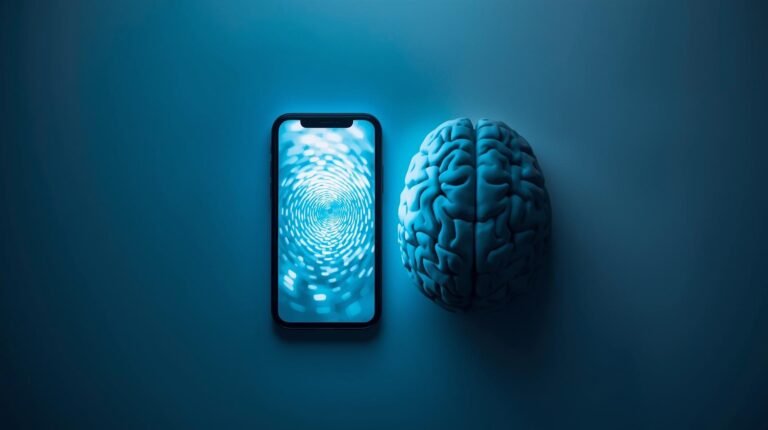
Active Learning and the Brain: how Neuroscience Confirms the 1-To-1 Method for Language Fluency.
In the digital age, we are constantly surrounded by passive stimuli. From consuming quick news to the
Do you like it? Share the article.
The risk of mental laziness in the digital age
As recently explored in an in-depth article by Wired.it, the only true defense against this trend is active learning. This is crucial not only for those aiming for
(Source: The article explicitly references the analysis by Simone Cosimi on Wired.it, 11.10.2025, titled “Languages and the brain, how active learning can counteract mental laziness in the digital age”).
Passive vs. Active Learning: what happens in the brain
Generic courses and free apps operate in passive mode: they rely on recognition, flashcard memorization, and association. These activities only partially activate the neural network.
In contrast, active learning—the act of retrieving, applying, and producing in real-time—forces the brain to establish stronger and more lasting neural connections.
Passive Learning (A1/A2 basics):
Focus: Input.
Risk: Reaching a “Plateau” at B2, where understanding is possible, but producing with the necessary elegance is not.
Active Learning (Necessary B1/C1):
Focus: Output and Application.
Result: Development of a deep cultural competence and the ability to handle complex debates. Crucial for solidifying complex grammar (e.g., Subjunctive) that paralyzes B1 students.
Embodied Cognition: why the 1-to-1 method beats Apps.
As confirmed by Professor Claudia Repetto (Catholic University) in the Wired article, Embodied Cognition (the connection between bodily experience and cognition) is central. Learning is more effective when verbal stimulus is associated with visual stimulus and action.
Our 1-to-1 Culture-First Method is structured precisely to force active learning and overcome the limitations of passive digital:
Pronunciation and Intonation: No AI or app can correct the nuances of your pronunciation in real time. Our lessons force you to produce clean speech, stimulating the motor cortex of language.
Complex Production: Discussing a text like Lutheran Letters or analyzing art requires active manipulation of the Subjunctive and use of advanced vocabulary. It’s not recognition, it’s construction.
Frequency and Intensity: Individual lessons guarantee maximum intensity and frequency of active exposure, elements that, as suggested by experts, are more important than simple “competence threshold” for delaying cognitive decline.




Leveraging Human Intelligence against AI passivity
The article raises one final challenge: the use of AI. As researcher Repetto clarifies, completely delegating writing tasks to AI risks progressively reducing thinking and linguistic production capabilities.
Our strategy is the opposite: Maintain control over creative, critical and generative processes. Only a human teacher can evaluate your pronunciation, your ability to generate complex arguments and your cultural competence.
In summary, to achieve excellence, you must choose the approach that requires maximum cognitive effort and minimum mental laziness.

Conclusion
Neuroscience is clear: true C1 fluency doesn’t come from passive consumption, but from active learning that is challenging. If you feel you’ve reached your limit with passive methods and that your mind is succumbing to digital laziness, whether you’re a stuck B1 or aspiring to C1, it’s time to invest in the only approach that science supports.
Are you ready to transform Italian from a digital hobby into a real cognitive skill?
Choose the Method that defeats mental laziness and unlocks B2 level for you.