
Italian language basics: the 4 cultural pillars most Apps miss (beyond "Ciao")
When you search for “Italian language basics”, most results give you a static list of italian survival phrases for travelers: ciao, grazie, una pizza per favore. While useful for a weekend trip, these are not the foundations of a language. They are just tools for survival.
If your goal is to truly speak Italian—to connect with the culture, understand the cinema, and be respected by locals—you need a different set of basics. You need to build your “cultural house” on solid ground. Here are the 4 true basics of the Italian language that apps often ignore, but which are essential for any student aiming for fluency.
Do you like it? Share the article.
Basic #1: The Sound (diction comes before vocabulary)
In English, you can often mumble and still be understood. In Italian, clarity is king. One of the most critical italian pronunciation tips for english speakers is to stop focusing on words and start focusing on sounds.
The Open/Closed Distinction: Italian has 7 vowel sounds, not 5. Knowing the difference between pesca (peach – open E) and pesca (fishing – closed E) is the mark of a cultured speaker.
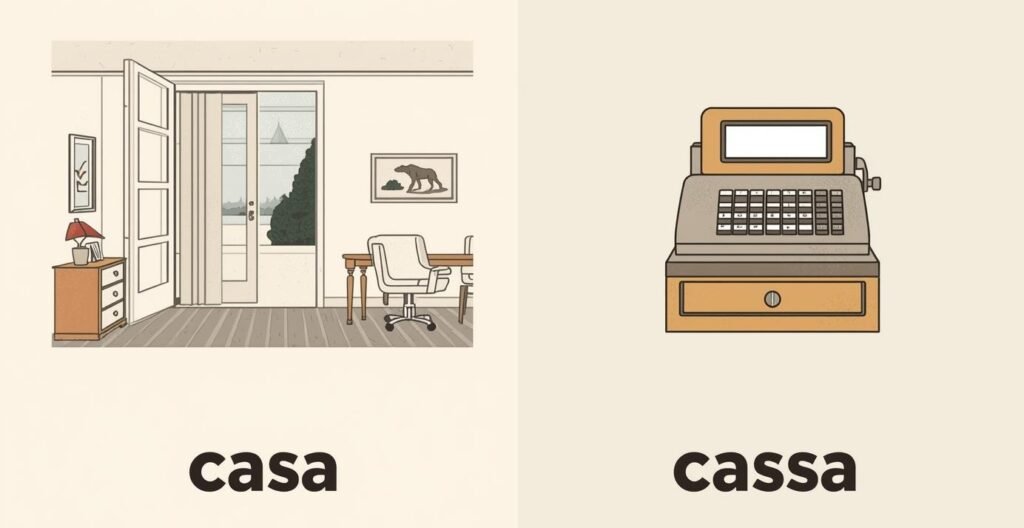
The Double Consonants: A casa is a home; a cassa is a register. If you don’t master the rhythm of double consonants immediately, you aren’t speaking Italian; you are speaking a foreign version of it.
Pro Tip: Don’t just read common italian phrases for daily life. Listen to their music. Diction is the foundation of confidence.
Basic #2: The Hierarchy (etiquette & the art of "Lei")

Italian society is built on respect and nuance. The grammar reflects this. The second “basic” is understanding the Social Hierarchy.
Many beginners rush to use Tu (informal you) with everyone. This is a cultural mistake. To navigate Italy correctly, you must master italian etiquette phrases polite.
Tu: For friends, family, children, and peers.
Lei: For strangers, elders, professionals, and anyone you wish to show respect to.
The Trap: Using Tu with a waiter or a professor isn’t “friendly”; it can be perceived as rude or uneducated. Mastering the Lei form is essential basic etiquette for the cultured traveler.
Basic #3: The construction (logic over memory)
Stop memorizing phrasebooks. The true basic of Italian is its Logical Structure. A classic stumbling block for beginners is the difference between essere and stare usage.
In English, you say “I am” for everything. In Italian, precision matters:
Essere (To Be): Identity and permanent qualities (Sono italiano – I am Italian).
Stare (To Stay/Be): Health and temporary states (Sto bene – I am well).
The Insight: Understanding this logic early prevents the “foreigner mistakes” that persist into intermediate levels.

Basic #4: The Melody (how to sound natural)

Finally, if you want to know how to sound more italian speaking, you must look beyond the dictionary. Italian is a musical language, and the “melody” serves a grammatical purpose.
Intonation: The way you end a sentence changes its meaning. In Italian, the structure often stays the same (Tu mangi vs. Tu mangi?); only the melody rises.
Fillers (Intercalari): Native speakers use italian fillers words like allora, cioè, or insomma to connect thoughts. Using these correctly instantly makes you sound more fluent than someone with a perfect vocabulary but a robotic delivery.

Start with Quality, Not Quantity
Learning the Italian language basics is not about how many words you know in your first week. It is about how you learn them.
If you start with bad diction and ignore the cultural hierarchy, you will have to unlearn bad habits later. If you start with a Culture-First approach—focusing on sound, respect, and logic—you are building a path straight to C1 fluency.
Are you ready to build your Italian on a solid foundation?
Skip the tourist traps. Book your first 1-to-1 lesson and master the real basics today!