Why Italy? — #1
Rome did not end in 476
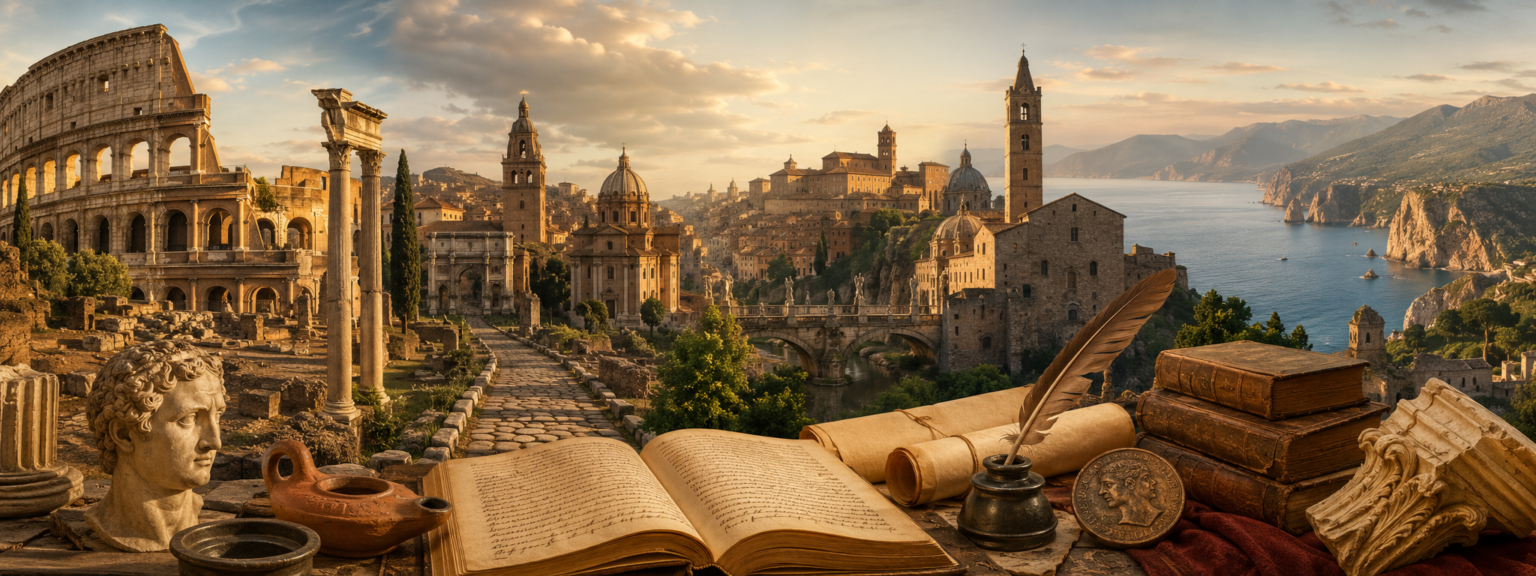
There are dates we learn by heart which, precisely because of this, risk losing their meaning. 476 AD is one of them: in the traditional schoolbook version of history, it marks the end of the Western Roman Empire and the beginning of a new era. Yet all it takes is a walk through an Italian city, a page of Dante, or a word from the language we speak every day to make that date suddenly seem far less clear-cut.
Because Rome, in reality, did not end in 476.
A political system came to an end. The Western emperor disappeared, and the territories of the Empire began to undergo profound transformations. But what Rome had built over the centuries — a language, a legal system, a network of cities and roads, forms of administration, and, above all, a cultural legacy — continued to live on, changing shape over time.
And it is precisely this continuity, rather than the famous “fall”, that has something important to tell us about Italy.
An empire much larger than Rome
When we think of the Roman Empire, we often imagine Rome as the centre of an immense territory, from which power radiated towards the provinces.
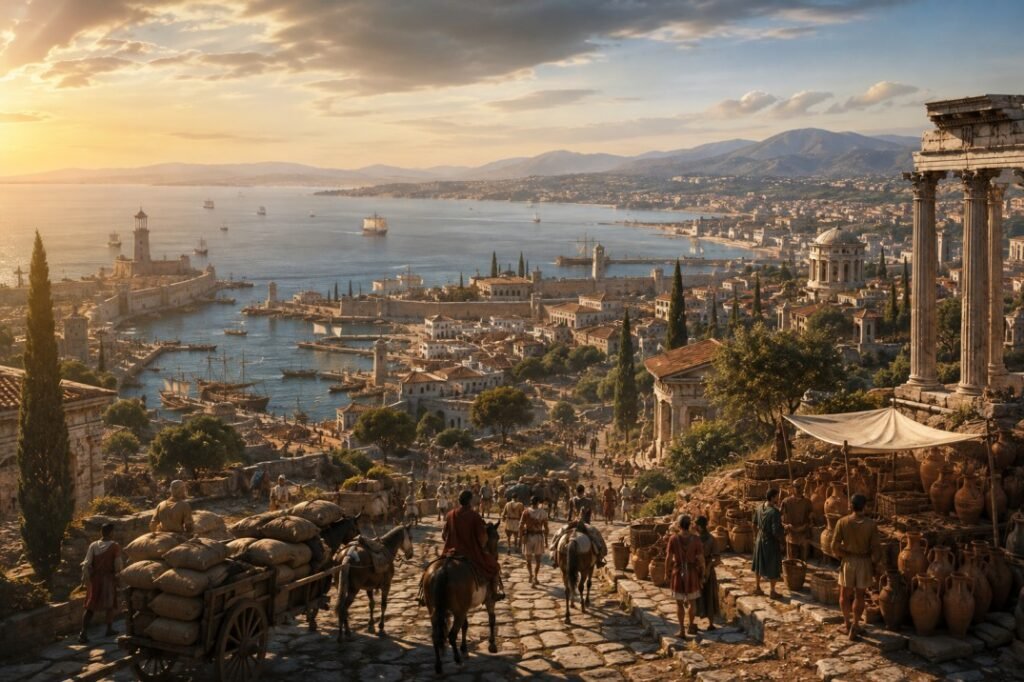
Yet at the height of its expansion, the Empire was an extraordinarily diverse world, encompassing territories stretching from Britain to Egypt, from the Iberian Peninsula to Syria, and from North Africa to the Balkans.
Rome had not simply conquered territories. It had built a network of cities, roads, ports, trade routes and administrative structures that connected populations very different from one another.
This is why the end of imperial authority in the West did not mean the immediate disappearance of everything that authority had created.
Political structures could collapse; habits, languages, cities and ideas followed much longer timelines.
What remains when an empire disappears?
Perhaps this is the most interesting question to ask when we look at the end of the Roman Empire.
Latin continued to be used for centuries in culture, the Church and administration. Roman law was studied, transmitted and reinterpreted. Cities continued to live, transforming themselves; ancient roads continued to connect territories; monuments, even after losing their original function, remained part of the landscape.
And Rome remained a model.
Throughout the Middle Ages and the centuries that followed, emperors, popes, rulers and intellectuals continued to engage with the Roman legacy, seeking to recover it, reinterpret it, or give it new meanings.
There is therefore no simple line running from the Roman Empire to contemporary Italy. Between the two lie more than a thousand years of transformations, conflicts, foreign dominations, city-states and regional states.
There is, however, a memory that has never ceased to be present.
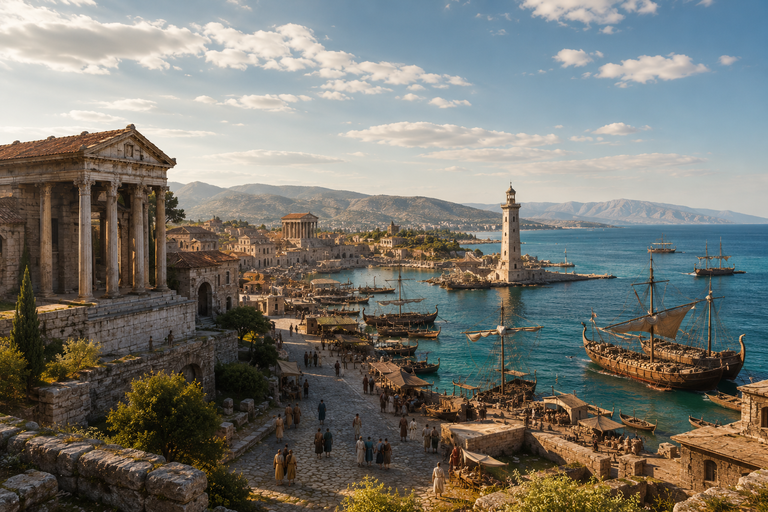
In Italy, the past is not simply the past
Perhaps this is where Italy has something particularly distinctive to offer. In many parts of the world, encountering the past means entering a museum, visiting an archaeological site, or standing in front of a monument. In Italy, the past is often something you encounter while simply going about your day.
A modern street may run alongside a Roman building; a church may have been built using much older structures; a square may still preserve the shape of an urban space that existed centuries ago.
The past is not necessarily separated from the present. Often, it is right beside us, above us, or beneath our feet.
This is one of the most fascinating characteristics of Italian cities, but also one of the reasons why understanding them requires something more than a tourist guide. A ruin does not tell us only when it was built. It also tells us what happened to it afterwards.
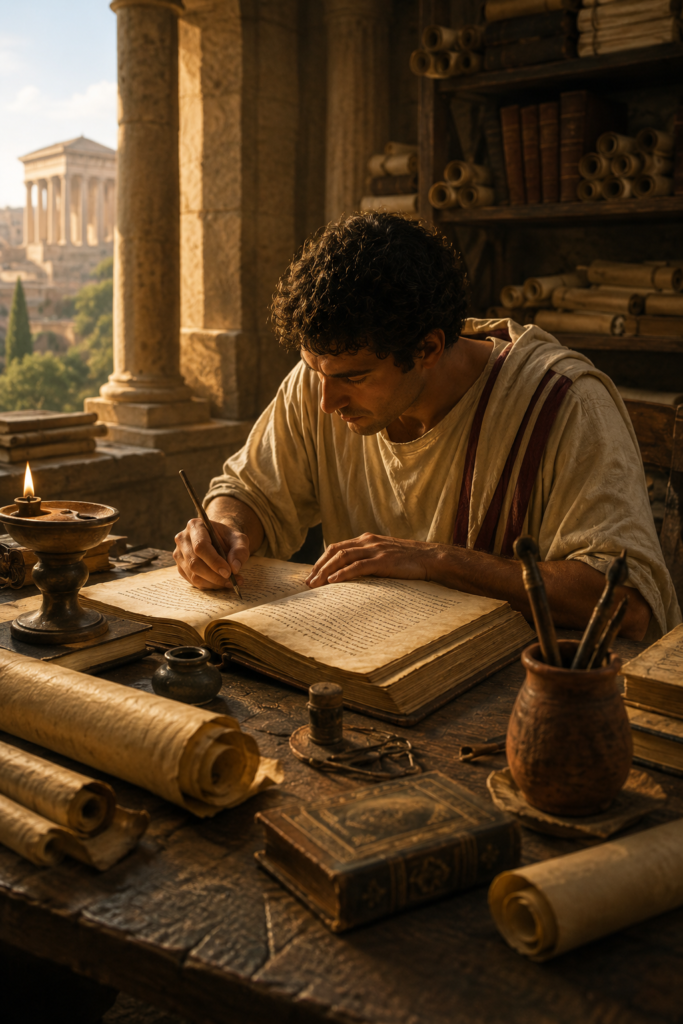
And then there is language
This story becomes even more evident when we stop looking at stones and start looking at words.
Italian was born from Latin, but it is not simply “Latin transformed”. It is the result of a long evolution shaped by linguistic changes, regional differences, contact between populations, and transformations in society.
Many of the words we use every day have a history that goes back much further than Italian as a national language.
Popolo, città, strada, famiglia, madre, padre, tempo, nome, corpo, occhio.
Some words have changed their meaning over the centuries; others have preserved traces of older ways of describing the world.
When we learn a language, then, we are not simply learning how to say something. We are entering, at least in part, into the history of that language and into the way the people who spoke it have described the world.
At a certain point, vocabulary stops being a list of words and becomes a map.
The Colosseum tells more than the story of ancient Rome
Let us take the Colosseum. At first glance, it is perhaps the most immediate symbol of ancient Rome: a monumental structure that seems simply to tell us that Romans built enormous amphitheatres for public spectacles.
Yet the Colosseum is also a testimony to the many different lives Rome has lived.
Built for Roman society, it was damaged, stripped of its materials, reused and reinterpreted over the centuries. Today, we encounter it through very different perspectives: for a visitor, it may be a symbol of Rome; for a historian, a testimony to imperial society; for an architect, an extraordinary example of ancient construction; for a writer or artist, part of an imaginary that has been built and rebuilt over the centuries.
The monument is still there, but its meaning has never remained exactly the same.
And this is precisely what makes Italy’s relationship with its past so fascinating: heritage is not something that is simply preserved. It is something that every generation continues to reinterpret.
Perhaps this is what it means to know Italy
When we study Italian through culture, we can simply learn a few facts, recognise the Colosseum and remember that Rome was the capital of the Empire. Or we can take one step further.
We can ask why a city has the shape it does, why a particular word has survived to the present day, why a monument continues to matter after almost two thousand years, or why Italians continue to debate their own past.
At that point, language changes its function. It is no longer simply the tool we use to talk about Italian culture. It becomes one of the tools through which we can interpret it.
And this is also why Rome is such a good starting point for Why Italy?: because in Italy, the past is not necessarily something we have left behind.
Sometimes, we are still walking through it.
Would you like to continue this conversation in Italian?
If you are already at B2 or C1, you probably do not need another list of vocabulary or yet another dialogue about what you did at the weekend.
Perhaps what you need is something different: something genuinely interesting to say in Italian.
In the individual lessons at Magnifico Mondo Italiano, we start precisely from there. Literature, art, cinema, history, Italian culture and ideas become the starting point for a real conversation, built around your interests and your level.