WHY ITALY #4:
Why did Italy become a country so late? And was it really a delay?
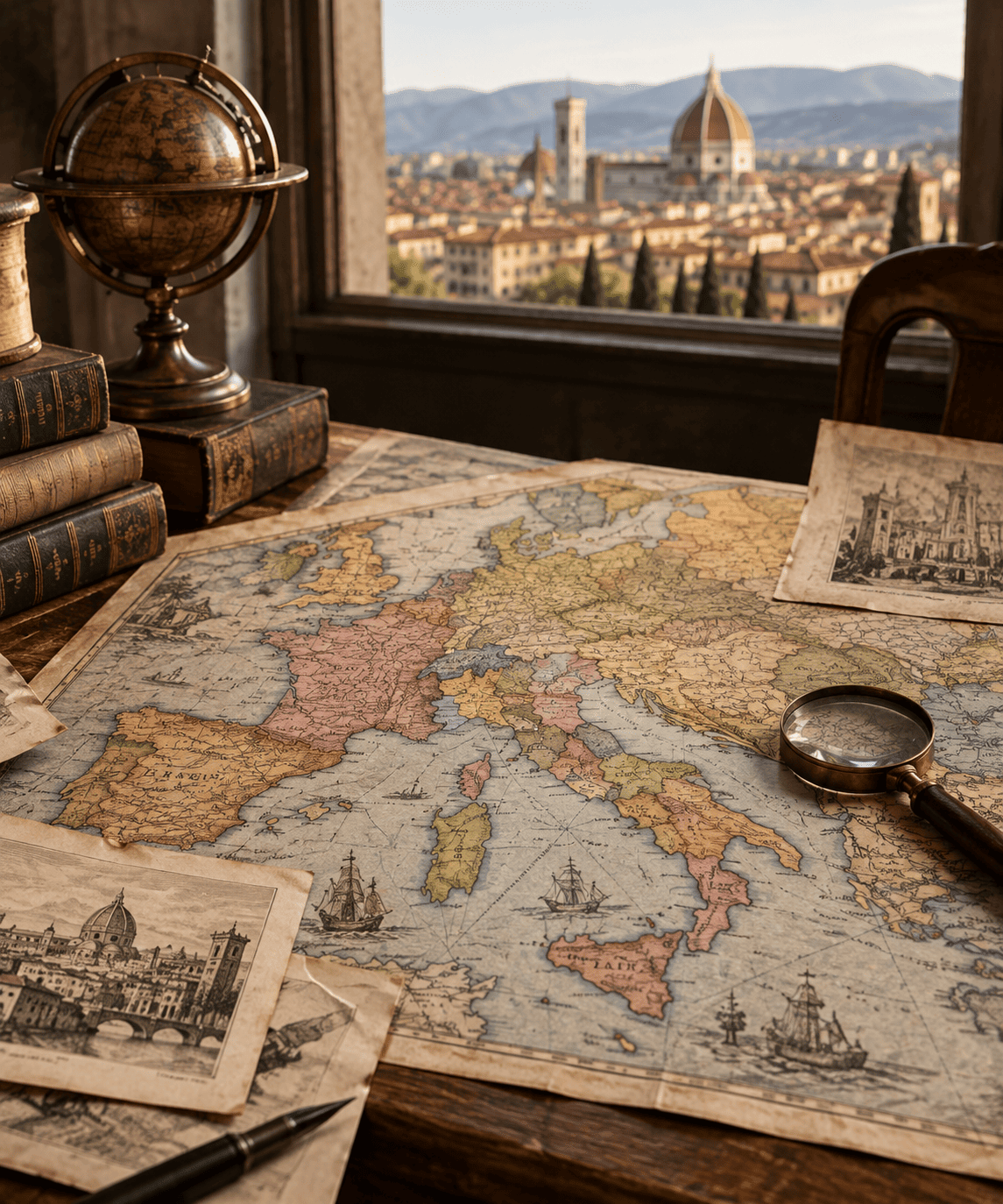
When we look at a map of Europe today, it is easy to imagine Italy as a country that has always been there: one territory, one state, clearly defined borders. But Italy as a unified country is actually quite recent.
The Italian state was established in 1861.
By that time, France, England and Spain had already been consolidating their political power for centuries, while the Italian peninsula was still divided into different states and political territories.
So it is tempting to tell the story in very simple terms:
Other European countries became states first. Italy arrived late.
But there is another question worth asking.
Italy before Italy
For centuries, the Italian peninsula was not one country. It was a collection of cities, republics, duchies and kingdoms, each with its own political institutions, traditions and interests.
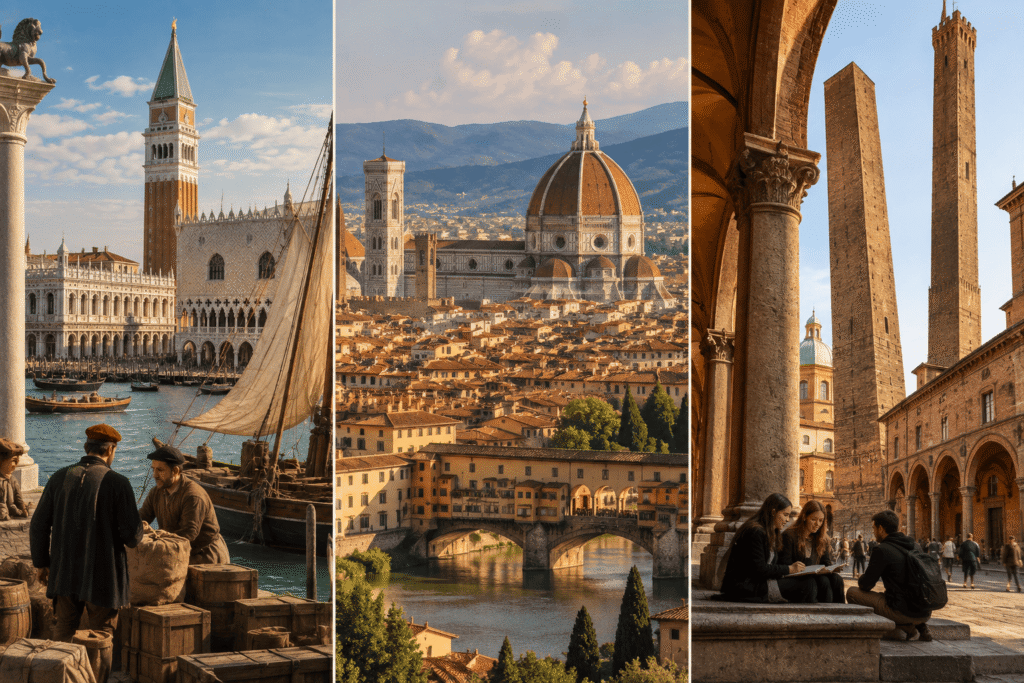
Venice was a major centre of Mediterranean trade. Florence developed important economic and cultural networks. Bologna became home to one of the oldest universities in Europe.
The peninsula was politically fragmented, but that did not prevent its cities from becoming some of the most dynamic and influential places in Europe. This is the first part of the paradox.
Political unity was missing, but cultural and economic vitality was certainly not.
In fact, some of the cities that we now think of as symbols of Italian culture became particularly powerful precisely within this fragmented political landscape.
A weakness — and an unexpected advantage
The absence of a unified Italian state clearly had disadvantages. Politically and militarily, fragmentation meant that the Peninsula did not have the same kind of centralised power that other European states were gradually developing. But political division also created competition.
Cities and regional states competed for influence, wealth and prestige. Rulers, merchants and aristocratic families invested in art, architecture and culture partly to demonstrate their power and distinguish their cities from others. This competition produced an extraordinary cultural legacy.
Many of the works of art and architectural masterpieces that we now associate with Italy were created in a world in which cities and states were constantly trying to make themselves more powerful, more prosperous and more prestigious. So the same political fragmentation that represented a weakness in one sense could also become a source of creativity and cultural richness. And this is where the story becomes much more interesting than a simple timeline of dates.

What if Italy had united much earlier?
Imagine, for a moment, that the Italian peninsula had become a single state in the thirteenth century.
Would Venice, Florence and Bologna have developed in exactly the same way? Would their competition have produced the same cultural environment? Would Italian cities have invested in art and architecture in quite the same way if they had all belonged to one larger political system?
We cannot know.
There is no alternative Italy that we can observe and compare with the one that actually existed. But the question is useful because it makes us look at Italian history differently. Instead of asking only why Italy became a unified state so late, we can ask what happened during the centuries when it was not one.
And that question reveals something important: being politically divided did not mean being culturally stagnant.
The Italian paradox
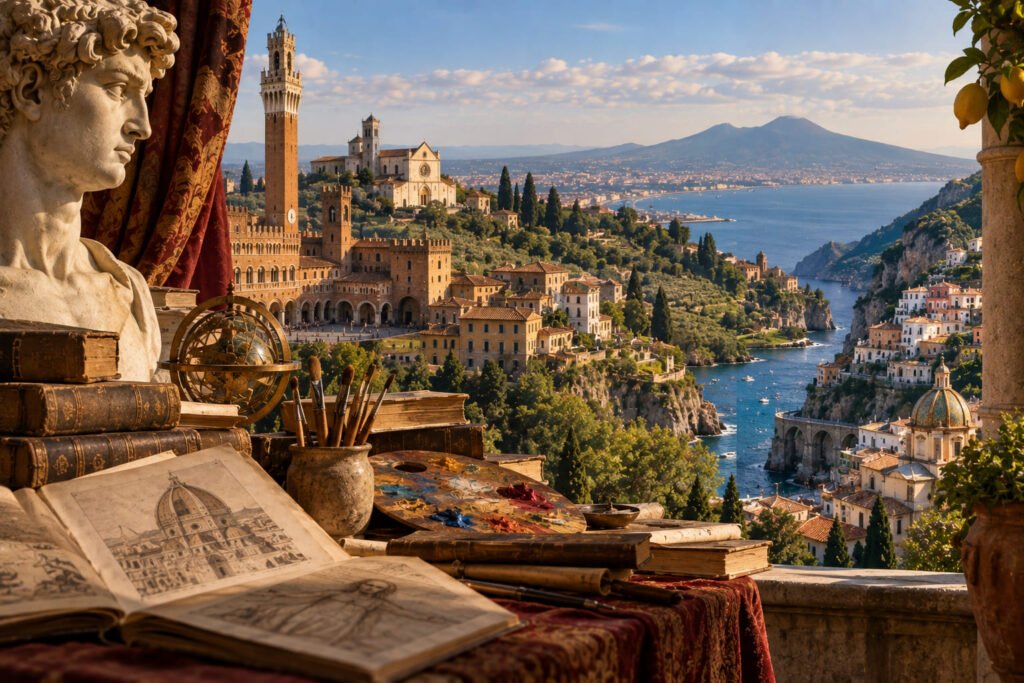
The story of Italian unification therefore contains a genuine paradox: the lack of a unified state was a political and military limitation, but the existence of many competing cities and states also created a particular environment in which commerce, art, architecture, education and culture could flourish.
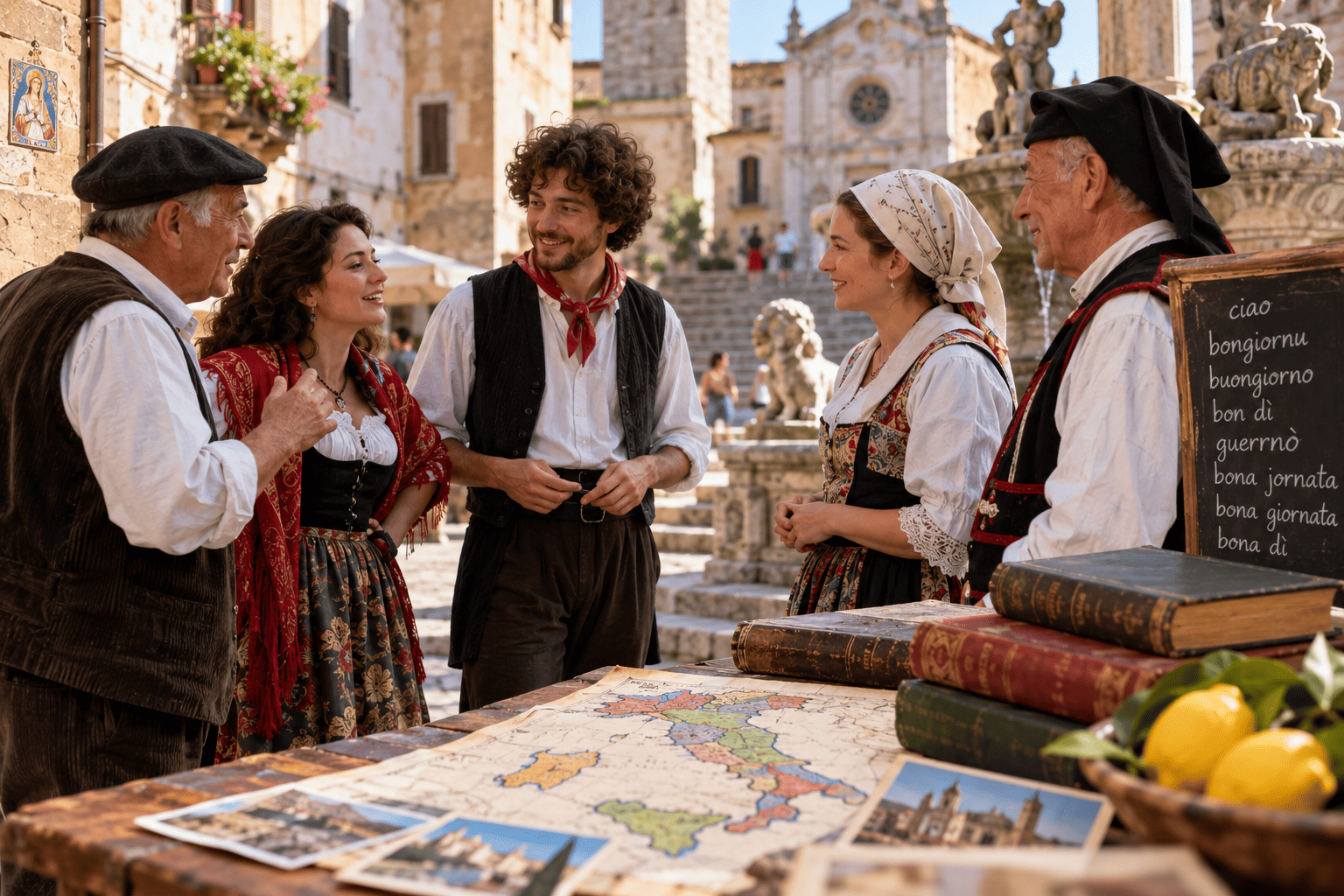
When Italy finally became a unified state in 1861, it did not simply bring together empty territories and draw a new line around them. It had to bring together places that already had different histories, institutions, traditions and identities. The new state therefore inherited a country that was already culturally diverse. And that diversity did not disappear with unification. It continues to be one of the defining characteristics of Italy today.
One Italy, many histories
This also helps explain something we explored in the previous Why Italy? article. Italy’s regional identities did not begin with the creation of the Italian state. They were already deeply rooted in the history of individual cities and territories. The Italian State arrived later and had to bring those different histories together. This makes the Italian experience rather different from the simplified idea of a nation in which the state comes first and a common identity develops around it.
In Italy, the process was, at least in part, the opposite: many local histories came first. The national state came later.
And perhaps this is one reason why Italy can still feel like a single country and, at the same time, like a collection of very different places. Italy, in other words, did not come into being all at once. And perhaps it continues to be Italian precisely because it has never been just one thing.
So, was Italy really late?
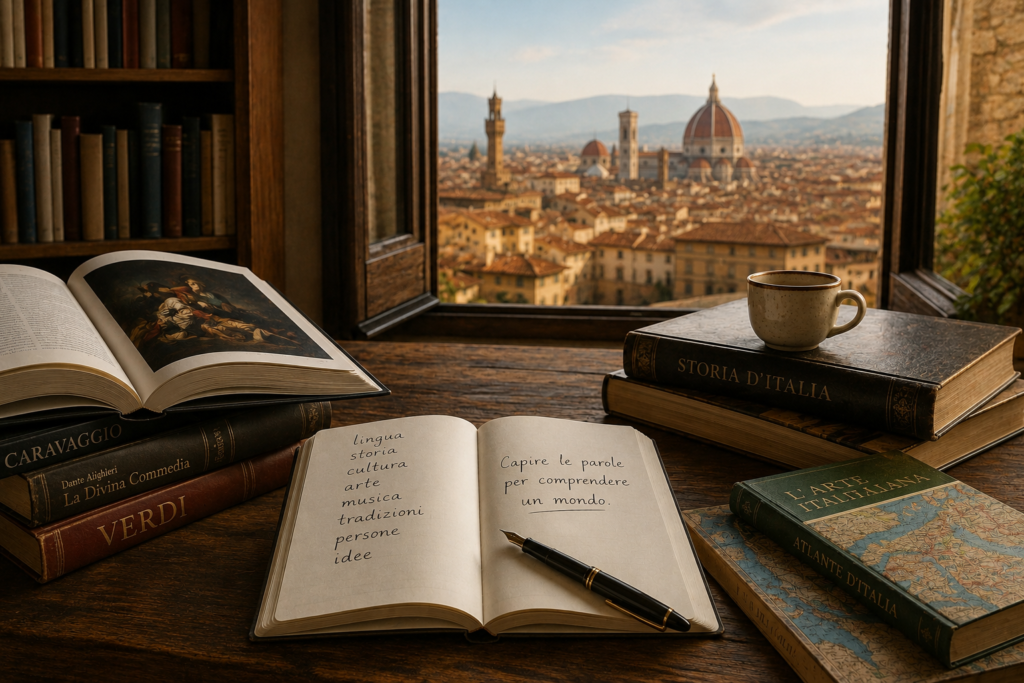
Perhaps the word “late” is itself the problem. If we judge Italian history only by the moment when the peninsula became a unified state, then yes, Italy appears to have arrived later than several other major European countries.
But if we look at the centuries that came before 1861, the picture becomes much more complicated. Italy was not simply waiting to become a country. Its cities were trading, competing, building, creating, studying and developing their own political and cultural identities. The country that eventually emerged in 1861 was therefore not the beginning of Italian history. It was the moment when many different histories were brought together under one state.
And perhaps the so-called “delay” is part of the reason Italy became the country we know today.
And what about the language?
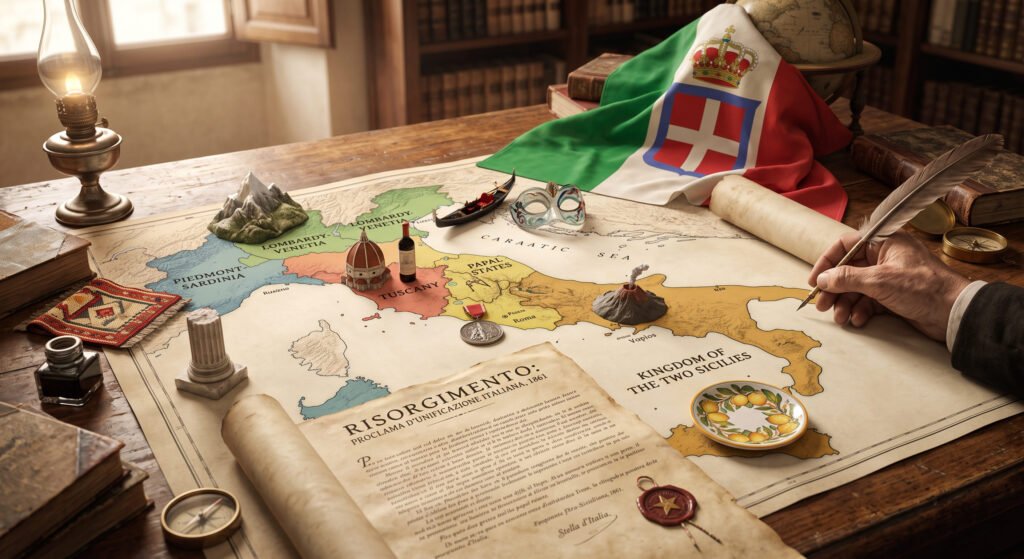
There is another interesting consequence of this long history. If a country develops for centuries through different cities and territories rather than through one centralised political system, what happens to the way people speak?
What is the difference between a dialect, an accent and a language? Can the way we speak become a sign of where we belong? And can a national language strengthen a shared identity without completely erasing local ones?
These are questions that take us beyond history and into one of the most fascinating aspects of Italian culture: the relationship between language and belonging. And perhaps that is where the story of Italy becomes, once again, a story about identity.

Would you like to continue this conversation in Italian?
If you study Italian at an intermediate or advanced level, history and culture can give you something much more valuable than a list of facts: something meaningful to talk about.
In the individual lessons at Magnifico Mondo Italiano, we use history, art, literature, society and culture as starting points for real conversations, helping you develop the vocabulary and confidence to express complex ideas in Italian.
Because learning Italian becomes much more interesting when you have something you genuinely want to say.